
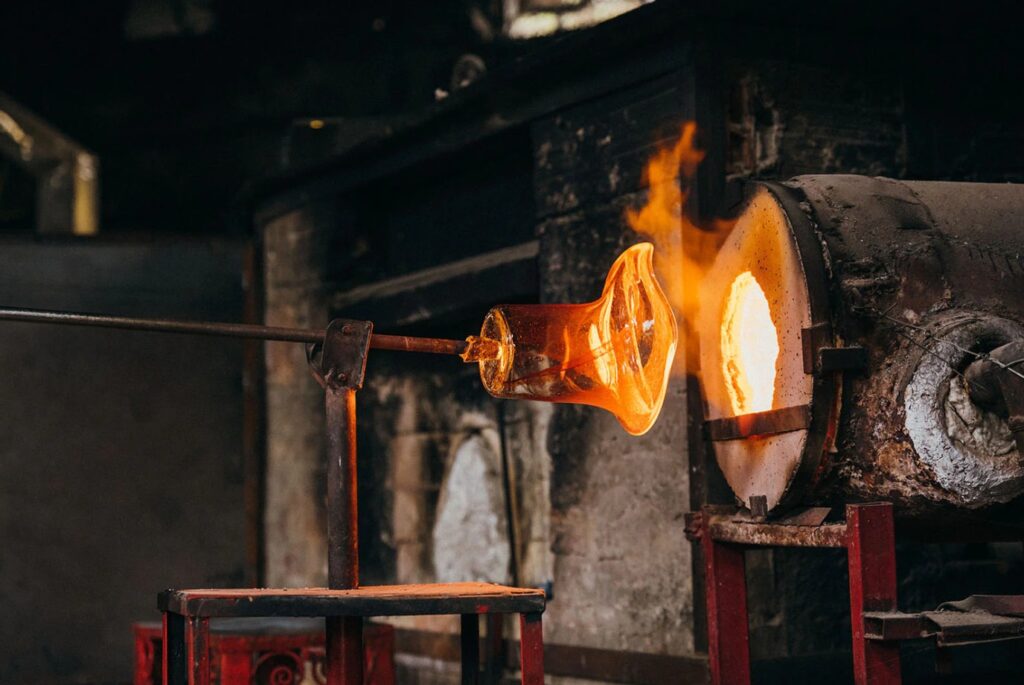
In an age of automated production, hand-blown glass stands as a powerful testament to human artistry and breath. Each piece is not merely made but born, carrying within it the unique imprint of its maker’s skill, timing, and intention. The journey from raw, granular sand to a luminous, functional object is a mesmerizing alchemy of elemental forces and delicate human intervention, a symphony played with fire, air, and motion. This process creates objects with soul, where slight variations are not flaws but signatures.
It begins in the crucible, where a mixture of silica sand, soda ash, and limestone is melted at staggering temperatures into a viscous, molten state known as “metal.” The glassmaker gathers a small amount of this glowing orb onto the end of a long, hollow steel pipe called a blowpipe. This initial “gather” is rolled on a marver—a flat steel table—to shape it and cool its surface slightly. Even at this first stage, the artist’s vision for the form begins to take shape through this simple rolling motion.
Then comes the magic act: the blow. The artisan gently blows into the pipe, and a bubble begins to form within the molten glass, like a breath giving life to form. This bubble becomes the central cavity of the vessel. The glass is repeatedly reheated in a glory hole (a secondary furnace) to keep it workable. Between heats, the maker swings, rolls, and shapes the glass using gravity, centrifugal force, and simple tools like jacks (tweezers) and paddles to elongate, flatten, or open the form.
Shaping is a dialogue between the artist and the material. Wooden blocks soaked in water are used to smooth and define curves. Tongs and calipers pull and pinch the glass to create handles, spouts, or decorative elements. The glass is constantly in motion, rotating on the pipe to maintain symmetry, as it cools from a glowing honey-like consistency to a more rigid state. This stage requires immense physical stamina and an intuitive understanding of how the glass will move and settle.
The final, critical step is the separation, or “cracking off.” Using a special tool, a precise score is made around the piece where it connects to the blowpipe. A light tap breaks the connection, leaving the open mouth of the vessel. The piece then enters an annealing oven, where it is cooled slowly and uniformly over many hours. This controlled cooling relieves internal stresses, ensuring the glass is strong and stable. Without annealing, the piece would be fragile and prone to shattering.
The result is a one-of-a-kind object where the human touch is palpable. You might see tiny air bubbles, gentle tool marks, or a slight asymmetry—these are the fingerprints of its creation. To own and use hand-blown glassware is to participate in an ancient tradition. It connects you to the rhythm of the maker’s breath, the heat of the furnace, and the timeless dance of transforming humble earth into enduring beauty.